
Change Readiness Compass
Navigate transformations with data-driven confidence

Summary
The Change Readiness Compass empowers Organizational Change Readiness Leads by synthesizing surveys, collaboration metadata, meeting transcripts, and performance metrics into actionable insights. This AI-driven tool predicts readiness hotspots, personalizes interventions, and measures adoption—helping leaders allocate resources efficiently and de-risk transformations. By turning scattered evidence into prioritized actions, it bridges the gap between data and decision-making.
Business Problem & Value
Organizational change often stalls due to fragmented insights and reactive interventions. This tool solves the problem by consolidating disparate data sources into a unified readiness map, enabling proactive, evidence-based decisions. The value lies in reducing transformation risk, improving adoption rates, and demonstrating measurable impact to stakeholders.
Steps to Build
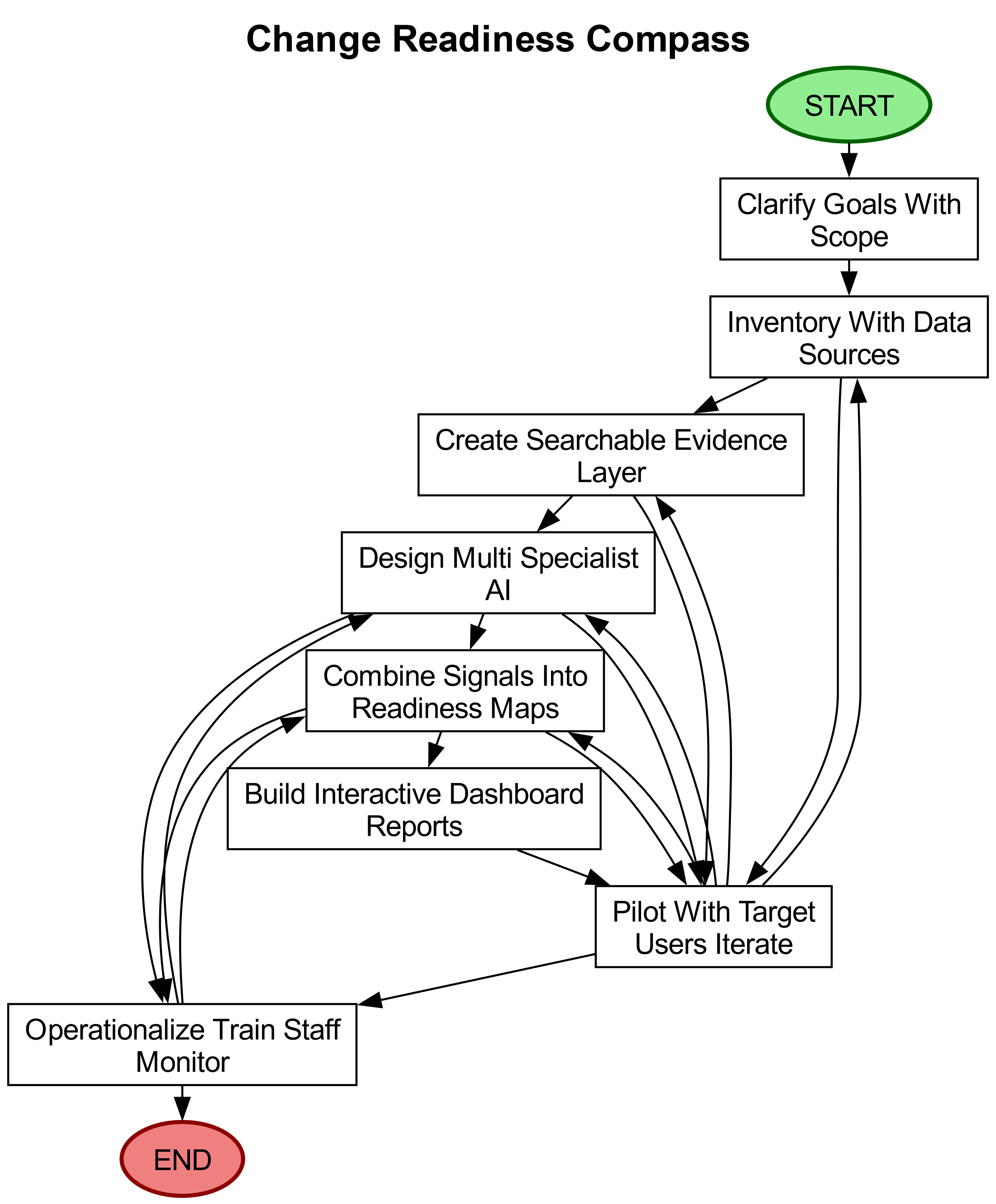
Clarify goals, scope, and success measures: Meet with sponsors and the Readiness Insights Lead to define the transformations to monitor, key decisions the tool must support, and adoption metrics (e.g., training completion, feature usage). Identify dashboard users and define success criteria for the pilot.
Inventory and prepare data sources: Secure permissions for surveys, collaboration metadata, meeting transcripts, and performance metrics. Align with legal and HR on privacy rules, anonymize personal data, and standardize formats for cross-source comparison.
Create a searchable evidence layer: Centralize prepared data in a tagged, searchable store organized by program, team, and date. Automate data ingestion to ensure regular updates from source systems.
Design the multi-part AI analysis: Develop specialized AI agents for qualitative text (surveys/transcripts), collaboration metadata, and performance metrics. Use long-context models to cross-validate findings, ensuring outputs include plain-language explanations and confidence estimates.
Combine signals into readiness maps and recommendations: Define rules for signal interaction (e.g., low engagement + declining usage = hotspot). Prioritize interventions by impact/ease, and generate personalized actions with transparent reasoning.
Build an interactive dashboard and exportable reports: Design views for hotspots, adoption timelines, and recommendations. Enable drill-down to source evidence (e.g., survey comments) and track action completion for measurable progress.
Pilot with target users and iterate: Test the tool with the Readiness Insights Lead and change managers. Collect feedback on usefulness, clarity, and gaps, then refine data mapping, rules, and explanations based on adoption correlations.
Operationalize, train staff, and monitor: Roll out to additional programs with training sessions. Implement human review checkpoints for high-impact recommendations and schedule ongoing data quality and system health monitoring.
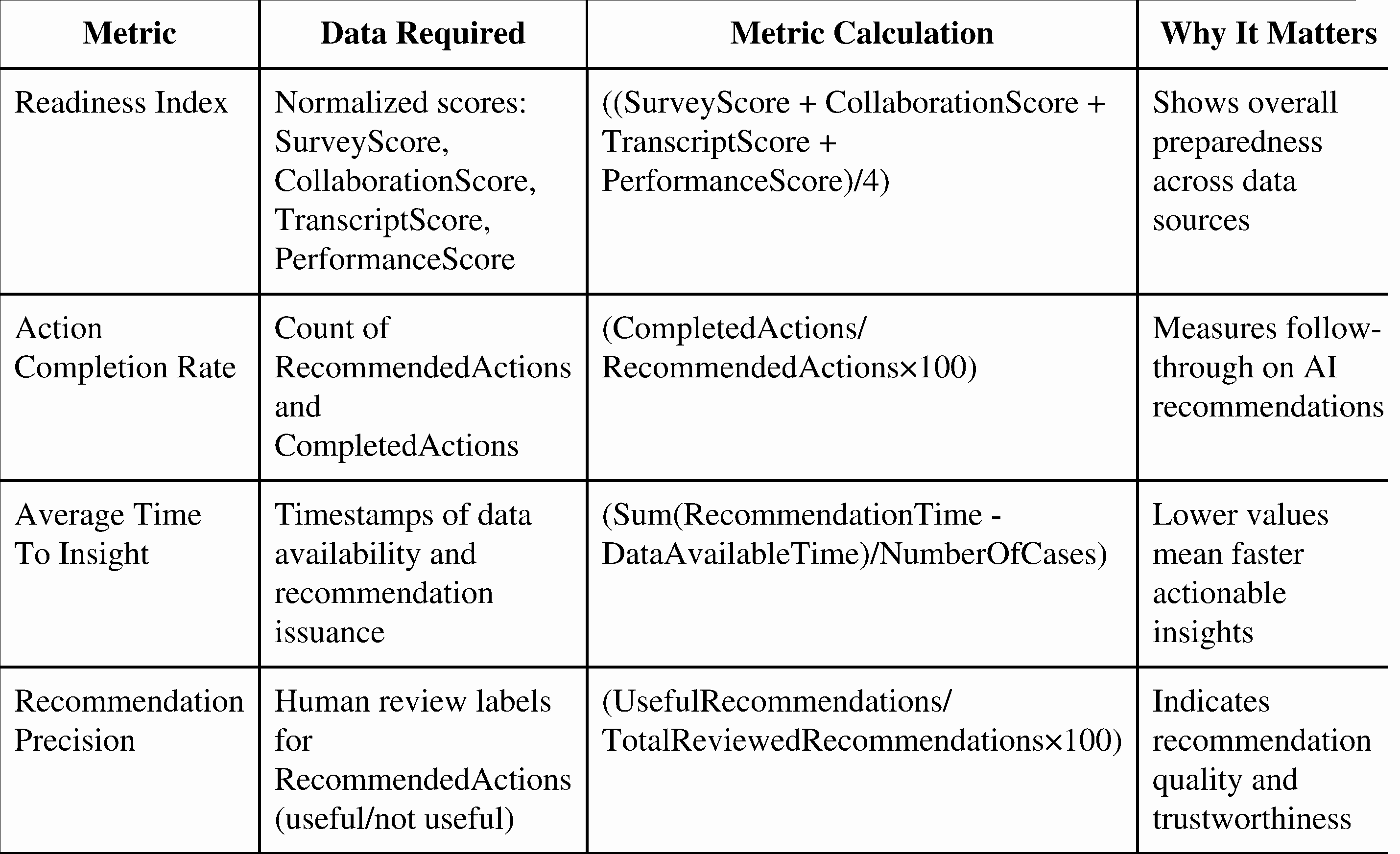
Impact Metrics
Human-in-the-Loop
Sponsors and the Readiness Insights Lead define goals and success metrics upfront.
Legal/HR teams approve data privacy protocols and consent rules before implementation.
Subject matter experts and change managers validate AI summaries during training.
The Readiness Insights Lead and change owners review high-impact recommendations before execution.
Ongoing user feedback shapes continuous tool improvements.
Things to Watch For
Privacy and consent: Combining transcripts and collaboration logs risks exposing sensitive employee data without proper masking and consent.
Overconfidence in AI: Sparse or biased data may lead to incorrect recommendations, requiring human oversight to avoid misallocated resources.
Data gaps: Inconsistent or missing data from teams/tools can create blind spots, skewing readiness assessments.
Key Takeaways
AI-driven readiness tools transform fragmented data into prioritized, explainable actions—reducing transformation risk.
Human oversight remains critical for validating high-stakes recommendations and ensuring ethical data use.
Continuous feedback loops and pilot testing refine accuracy, trust, and adoption over time.
Disclaimer: The idea discussed here reflects a potential application of AI. It is intended for exploration and inspiration. Actual implementation may vary.