
Incentive Optimization Simulation Engine
Smarter incentives, fewer risks—AI-powered plans that drive sales without the guesswork

Summary
Pharma sales teams struggle to design incentive plans that balance performance, compliance, and ROI. This Incentive Optimization Simulation Engine uses AI to analyze prescriptions, physician behavior, and regulatory constraints, simulating outcomes before rollout. Built for Pharma Sales Incentive Optimization Analysts, it reduces gaming risks while maximizing sales effectiveness through explainable, data-driven recommendations.
Business Problem & Value
Traditional incentive planning relies on intuition and static models, leading to misaligned rewards, compliance violations, or wasted spend. This system turns historical data and regulatory rules into actionable simulations, enabling teams to test and refine plans before deployment—boosting ROI, reducing gaming risks, and ensuring audit-ready transparency.
Steps to Build
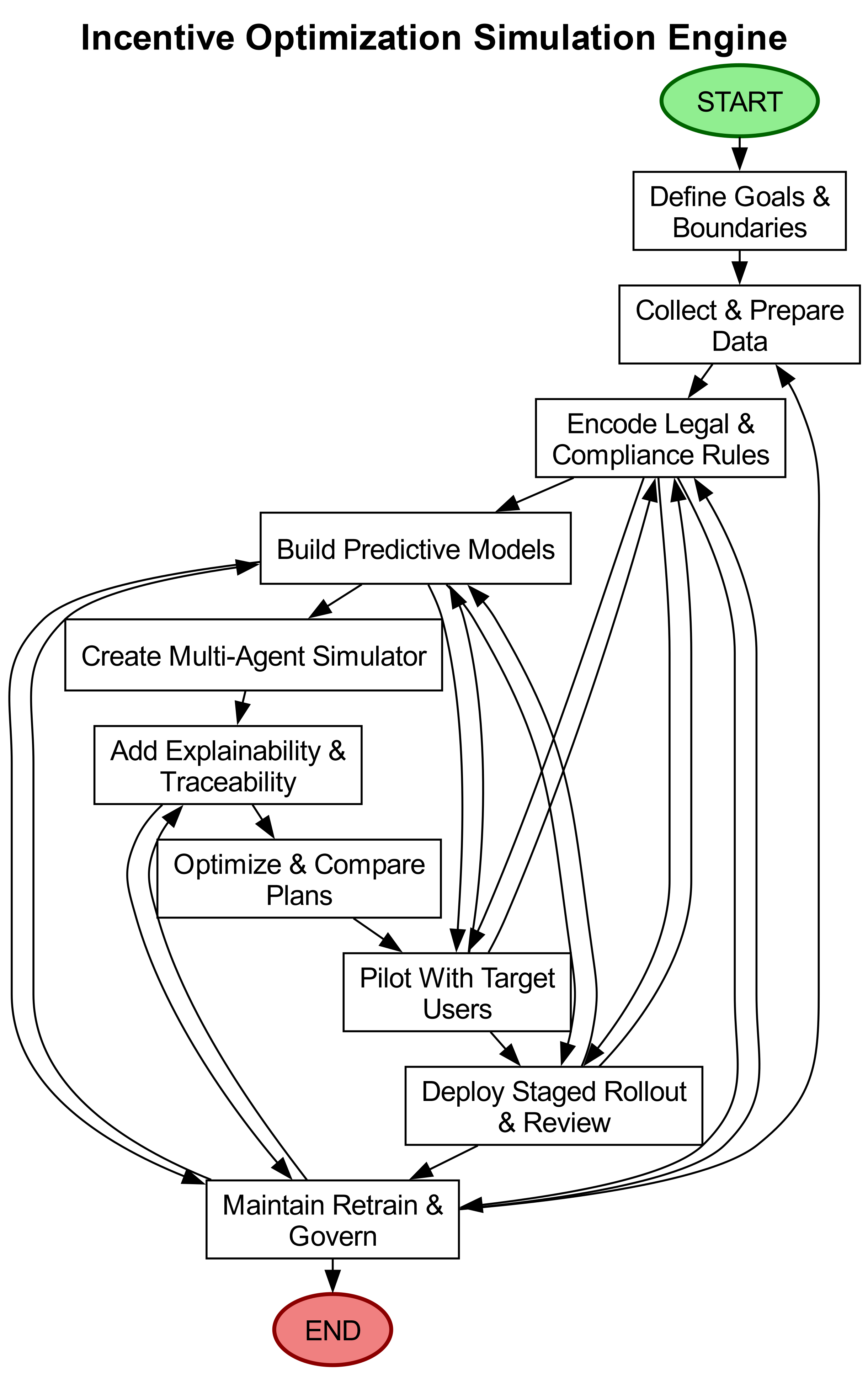
Define goals and boundaries: Gather stakeholders (commercial leaders, sales managers, compliance, finance) to align on measurable objectives (e.g., sales lift, margin, physician engagement) and unacceptable behaviors. Document legal/regulatory constraints to enforce during simulations.
Collect and prepare data: Integrate prescription records, CRM activity, territory performance metrics, and physician behavior signals. Clean data by removing personal identifiers, correcting errors, and standardizing fields across sources.
Turn rules into machine-readable constraints: Collaborate with legal/compliance teams to codify regulatory limits (e.g., bonus caps, prohibited payment types) into clear, enforceable rules. Store these for automated validation during plan evaluation.
Build predictive behavior models: Develop interpretable models that estimate how physicians and sales reps respond to incentives, using past actions and territory traits as inputs. Prioritize clarity to ensure stakeholders understand predictions.
Create a multi-agent simulator: Model key decision-makers (reps, physicians, managers) as agents with behavior rules driven by predictive models. Run “what-if” scenarios to observe how changes in incentives affect outcomes.
Add explanation and traceability: Generate plain-language explanations for each simulation, detailing predicted behavior changes and their impact. Maintain logs and audit trails for compliance and stakeholder review.
Optimize and compare plans: Simulate multiple incentive designs, ranking them by objectives while enforcing constraints. Present top plans with expected gains, risks, and trade-offs for decision-makers.
Pilot with target users: Test 1–2 recommended plans with a small group (e.g., select territories or volunteer reps). Gather feedback on practicality, unintended behaviors, and compliance to refine models.
Deploy with staged rollout and human review: Expand from pilot to full rollout in phases, requiring approvals from sales leadership and compliance at each stage. Monitor real-world outcomes vs. predictions to identify gaps.
Maintain, retrain, and govern: Schedule regular updates to data, models, and rules (e.g., for regulatory changes). Establish a governance group (compliance, legal, business owners) to oversee ongoing improvements.
Impact Metrics
Human-in-the-Loop
Stakeholder alignment: Define objectives, constraints, and unacceptable behaviors with input from commercial leaders, compliance, and finance.
Data validation: Review and approve cleaned datasets, ensuring accuracy and compliance with privacy regulations.
Model oversight: Correct training examples when predictions misalign with real-world behavior; label data to improve model accuracy.
Plan approval: Review and sign off on top recommended incentive plans, balancing predicted outcomes with business priorities.
Pilot feedback: Gather structured input from target users (e.g., sales reps) to refine simulations and address practical challenges.
Ongoing governance: Monitor performance, audit results, and approve updates to models, rules, or data as regulations or business needs evolve.
Things to Watch For
Data privacy and confidentiality: Sensitive commercial and health-adjacent data must be de-identified, secured, and used under legal agreements to avoid breaches.
Model mistakes and perverse incentives: Incorrect predictions may encourage unintended behaviors (e.g., gaming). Continuous monitoring and human review are critical to catch and correct issues.
Regulatory and audit risk: Incomplete or misinterpreted rules could lead to non-compliant plans. Require formal legal sign-off and maintain auditable trails before rollout.
Key Takeaways
AI-driven simulations replace guesswork with data-backed incentive plans, balancing sales growth, compliance, and ROI.
Explainability and traceability ensure recommendations are transparent, auditable, and aligned with regulatory constraints.
Human oversight remains essential—from defining goals to approving plans and monitoring outcomes—to mitigate risks and refine the system over time.
Disclaimer: The idea discussed here reflects a potential application of AI. It is intended for exploration and inspiration. Actual implementation may vary.