
Policy Compliance Navigator
AI-powered travel policy enforcement that flags violations before they happen

Summary
Corporate Travel Policy Compliance Analysts can leverage AI to automate the review of bookings, receipts, and itineraries against company policies. The Policy Compliance Navigator combines multimodal models, retrieval-augmented generation (RAG), and anomaly detection to flag potential violations, prioritize risks, and suggest remediation—reducing manual effort and compliance risk.
Business Problem & Value
Manual review of travel expenses is time-consuming and prone to errors, leading to policy violations, financial losses, and compliance risks. This solution automates policy checks, accelerates approvals, and provides auditable rationales, lowering operational costs and improving adherence to corporate travel guidelines.
Steps to Build
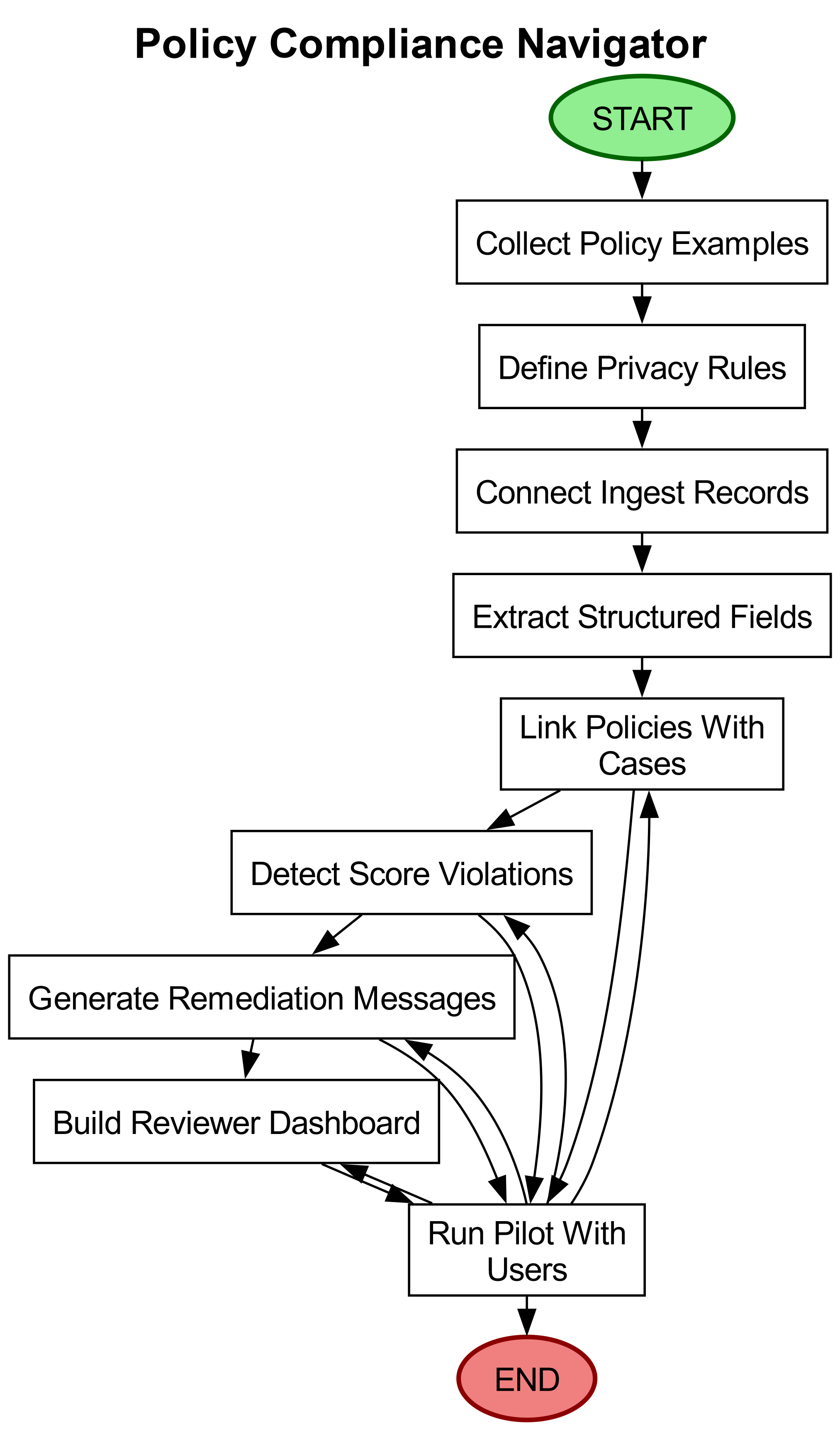
Collect rules and examples: Gather corporate travel policy documents, past approved exceptions, violations, sample bookings, itineraries, and receipt images. Redact personal details and document data sources (e.g., booking systems, expense tools).
Decide data handling and privacy rules: Define storage limits, retention periods, access controls, and protections for photos and payment details. Implement rules before processing live data.
Connect and ingest records: Build integrations to pull bookings, itineraries, and receipts into a centralized system or allow manual uploads. Tag each item with employee details, trip dates, and expense types for matching.
Read and structure information: Convert receipt images and itinerary text into structured fields (vendor, date, amount, city, travel class). Use OCR for images and text parsers for bookings, with human review for uncertain values.
Link policies and past cases for clear explanations: Create a searchable library of policy clauses and historical exceptions to cite exact rules or past decisions when flagging violations. Ensure source citations remain visible.
Detect likely violations and prioritize: Combine rule-based checks (e.g., out-of-policy travel class) with anomaly detection to identify unusual patterns. Score and rank violations by likelihood and cost, allowing human adjustment of detection strictness.
Generate remediation suggestions and approver messages: For each flagged item, provide plain-language explanations, next steps (e.g., refund requests), and editable approver messages. Include policy citations or past exceptions for context.
Build a reviewer dashboard and workflow: Design an interface for approvers to view flagged items, suggested messages, and audit rationales. Include options to accept, reject, request more info, or escalate, with decision capture for audit trails.
Pilot and improve with target users: Run a pilot with a small group of approvers and travelers. Gather feedback on false positives, message clarity, and workflow efficiency, then refine rules, detection logic, and messaging before full rollout.
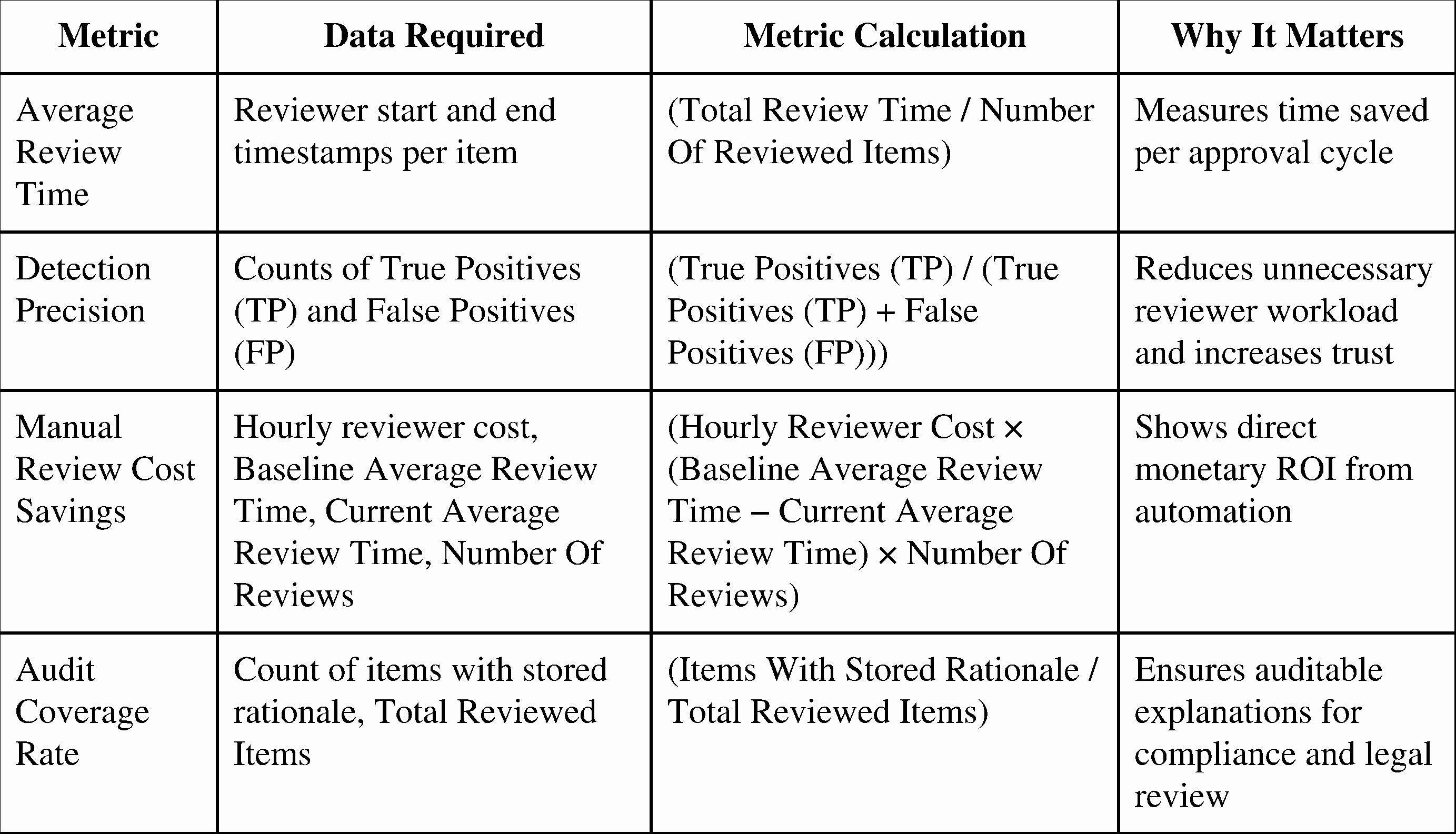
Impact Metrics
Human-in-the-Loop
Compliance or legal teams review and approve policy interpretations and data retention policies.
Approvers use AI-generated suggestions but add human context before finalizing decisions.
Target users provide feedback during pilots to refine detection logic and messaging.
Ongoing audits and periodic retraining ensure system accuracy and alignment with evolving policies.
Things to Watch For
Privacy risks: Receipts and bookings contain sensitive data; implement strict access controls to avoid legal exposure.
False positives/negatives: Over-flagging creates extra work, while missed violations increase compliance risk. Always pair AI with human review.
Cross-border compliance: Data storage and retention laws vary by country—consult legal teams to avoid regulatory issues.
Key Takeaways
AI automates travel policy compliance, reducing manual review time and improving accuracy.
Human oversight remains critical for final decisions, privacy controls, and system refinement.
Clear audit trails and remediation suggestions streamline approvals and lower compliance risks.
Disclaimer: The idea discussed here reflects a potential application of AI. It is intended for exploration and inspiration. Actual implementation may vary.